A hiking adventure: Culture walk on Husøya
 Kristoffer Møllevik / Visit Helgeland
Join us for a walk through the village and island of Husøy in Norway’s oldest fishing village, Træna. With a history dating back to the Stone Age and a vibrant cultural scene today, this is a pleasant stroll through a warm and creative island community
Key info
Difficulty: Easy. The tour follows a regular road, with the exception of a short stretch on a trail.
Distance: Approx. 3 km
Duration: 1 – 2 hours
Season: Year-round
Trailhead: Bystranda in the “center” of Træna, near the ferry pier, local store, and tourist information center.
The trip starts at the town beach, near the express boat dock, the local shop, and the tourist information center. During the summer, you can rent a bike at the tourist information center and take the trip as a cycling tour if you wish.
«A prosa, a song, a poem look yonder»
The first stage of the trip goes through the village and past the Aloha Café. You return the same way, and if you want to stop for some food and drinks, you can do so now at the start of the trip or on the way back. The first stop after this is the sculpture “A prose, a song, a poem look yonder”, created by the Norwegian-Zambian artist Anawana Halobaba.
The sculpture plays music as it stands facing the sea on the northwest side of the island, a short distance along the path from the road. The trail is easy to walk and marked with signs. Feel free to take some time here to experience the atmosphere created by the meeting of art and raw nature.
The Petter Dass-chapel
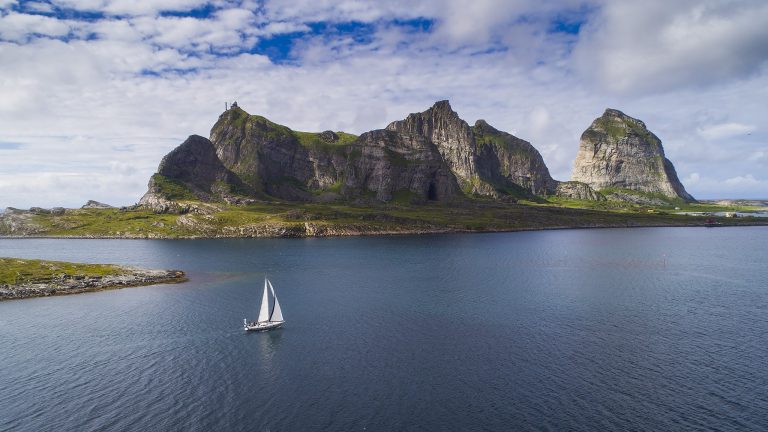
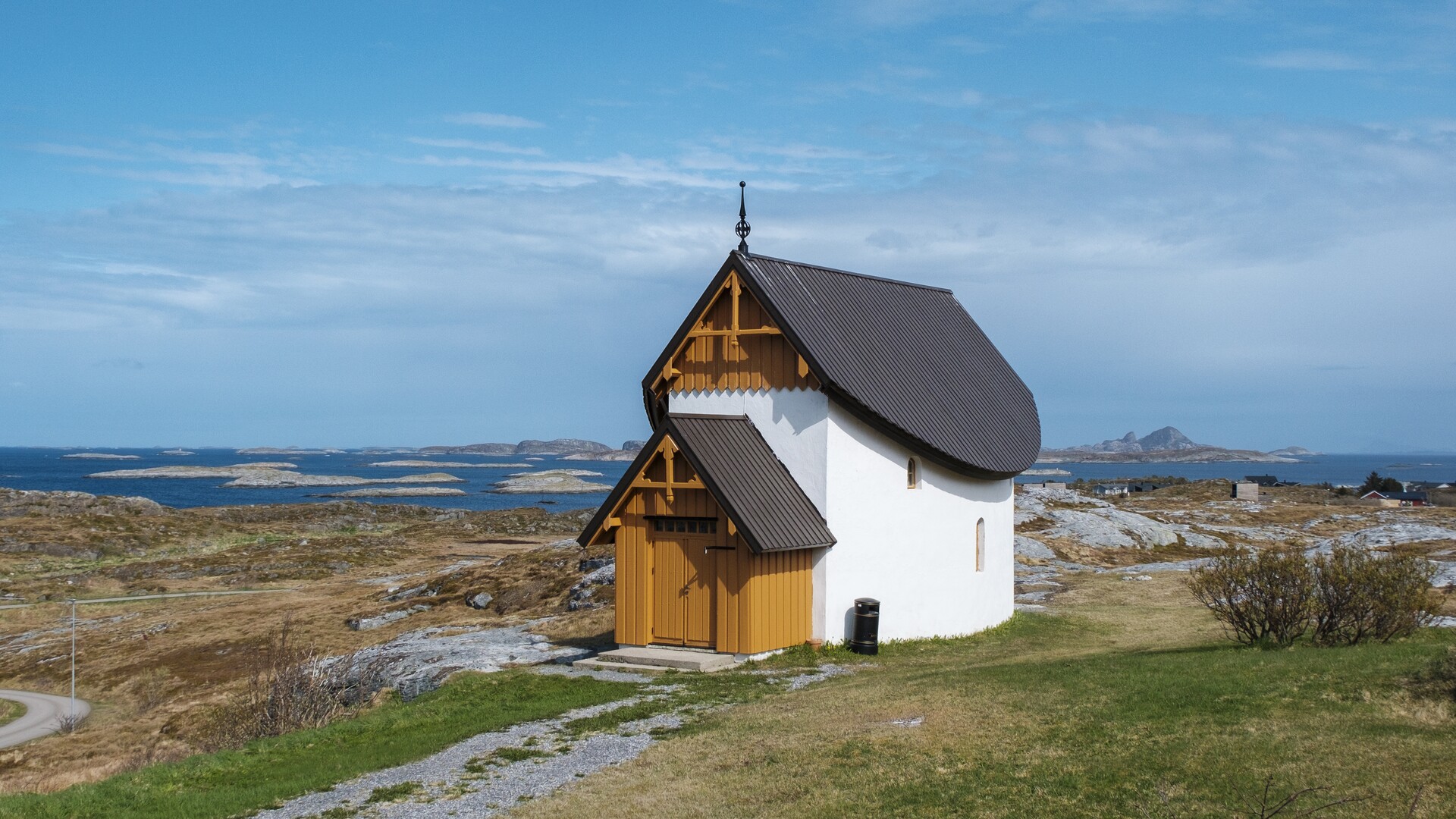
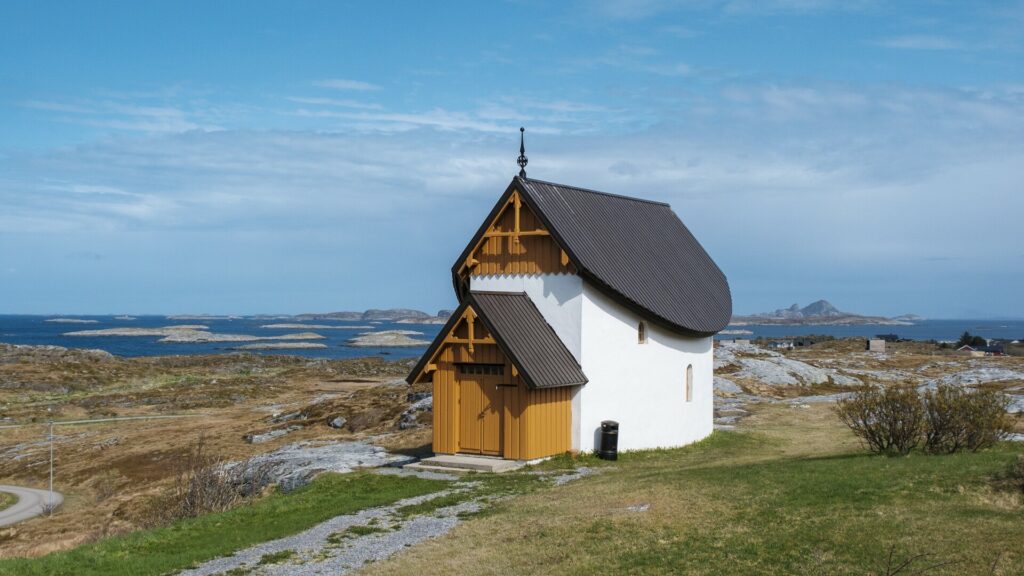
The second stage is about 300 meters to the beautiful Petter Dass Chapel on the west side of the island. The chapel is a memorial to all those who never returned from the sea, out here where the sea can be mercilessly vast and the old, open wooden boats helplessly small. If the weather is a bit rough when you stand at the chapel, feel free to look out towards the swell behind the Træn Mountains, or the white foam on Trænfjorden, to get an impression of the natural forces at play out there.
Kristoffer Møllevik / Visit Helgeland
When the chapel is open, it’s worth going inside. Inside, it’s beautifully decorated by the artist Karl Erik Harr, with motifs from the harsh life at sea, inspired by Petter Dass’ poem “Nordlands Trumpet”. Petter Dass was a priest and vicar in Helgeland from 1672 to 1707, and in the poem, he describes life and nature in Helgeland at that time.
The water tower
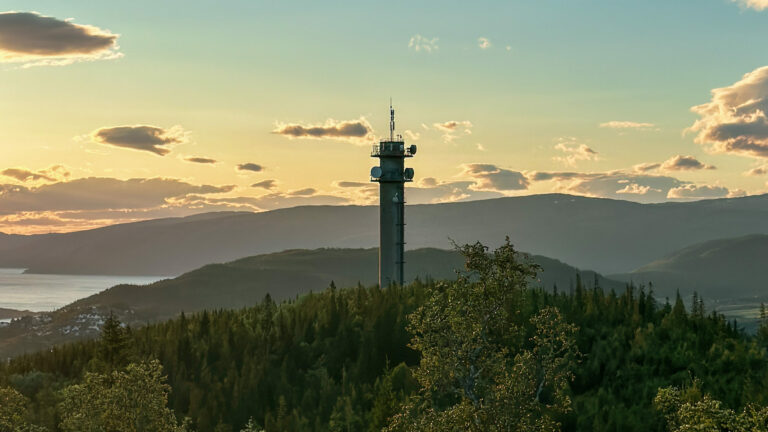
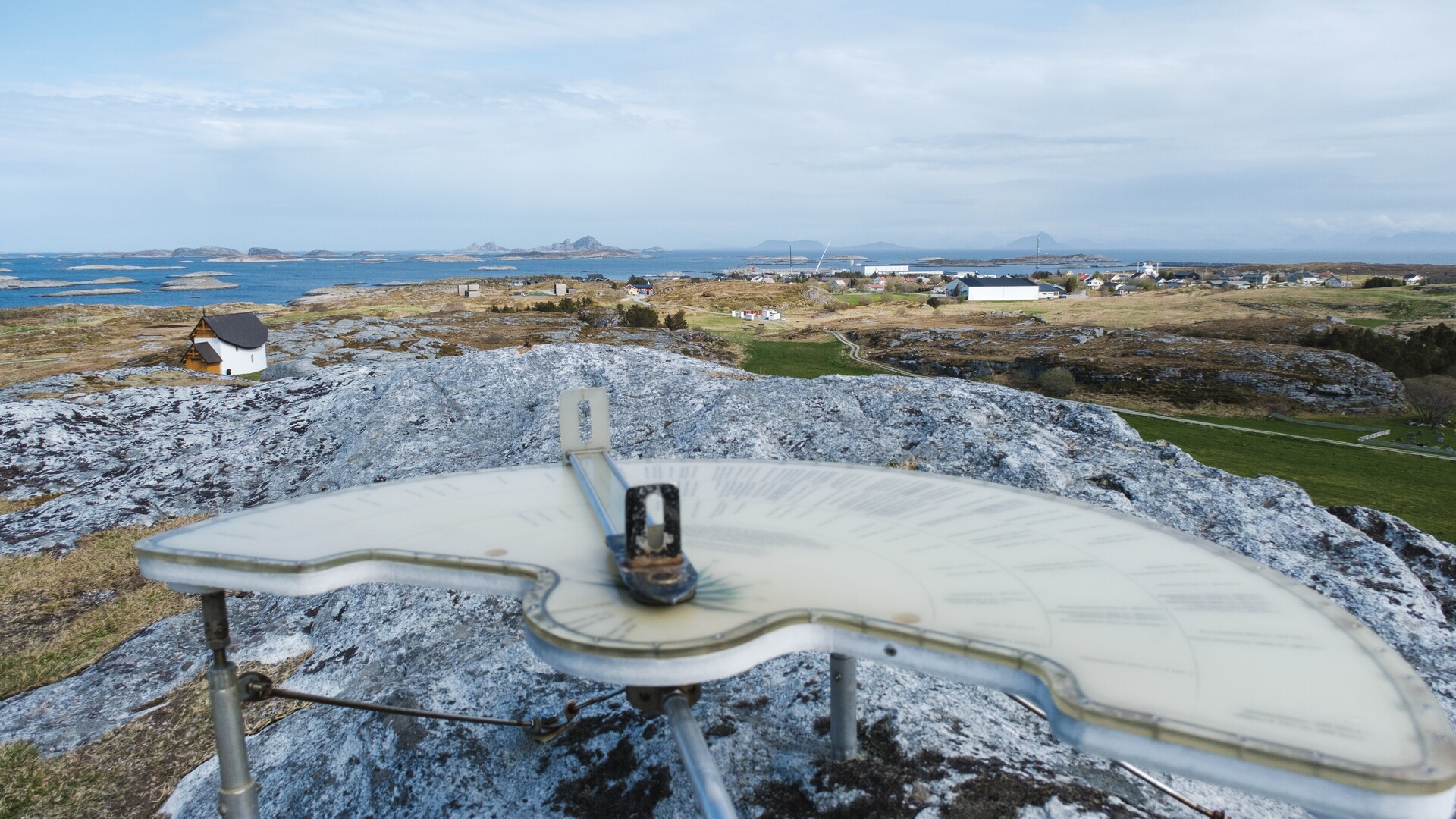
Just above the chapel is the Water Tower. On a hill barely 40 meters above sea level, it offers a nice viewpoint over the low landscape and the surrounding sea areas. Here you’ll also find a direction indicator that tells you which mountains you see nearby and far away.
Træna Church
On the way back to Træna Church, you pass by Pixel-Ørna on the sports hall, a large wall mural of a pixelated sea eagle created by the artist Strøk (Anders Gjennestad) in connection with the Træna Festival in 2009. You also pass by Aloha Café once again, giving you another opportunity to stop for a bite to eat or something to drink.
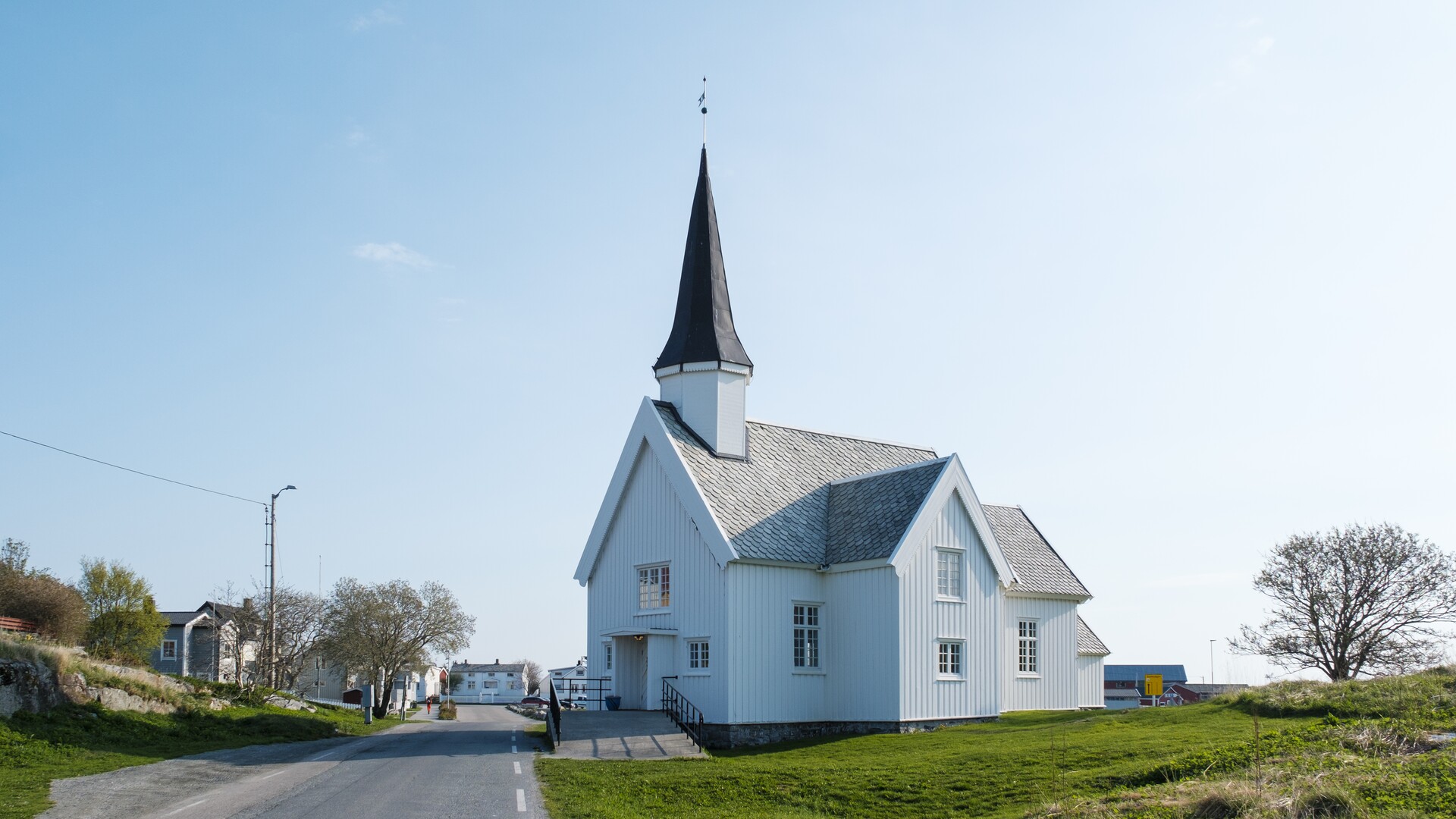
Træna Church is located by the town beach, where the tour started. The church was built in 1773, on the same foundation as the first church built in Træna. From the first church, the altarpiece, pulpit, and a chandelier have been preserved. Over the centuries, the church has undergone significant changes, but it still contains much of the original features.
Træna Bygdemuseum
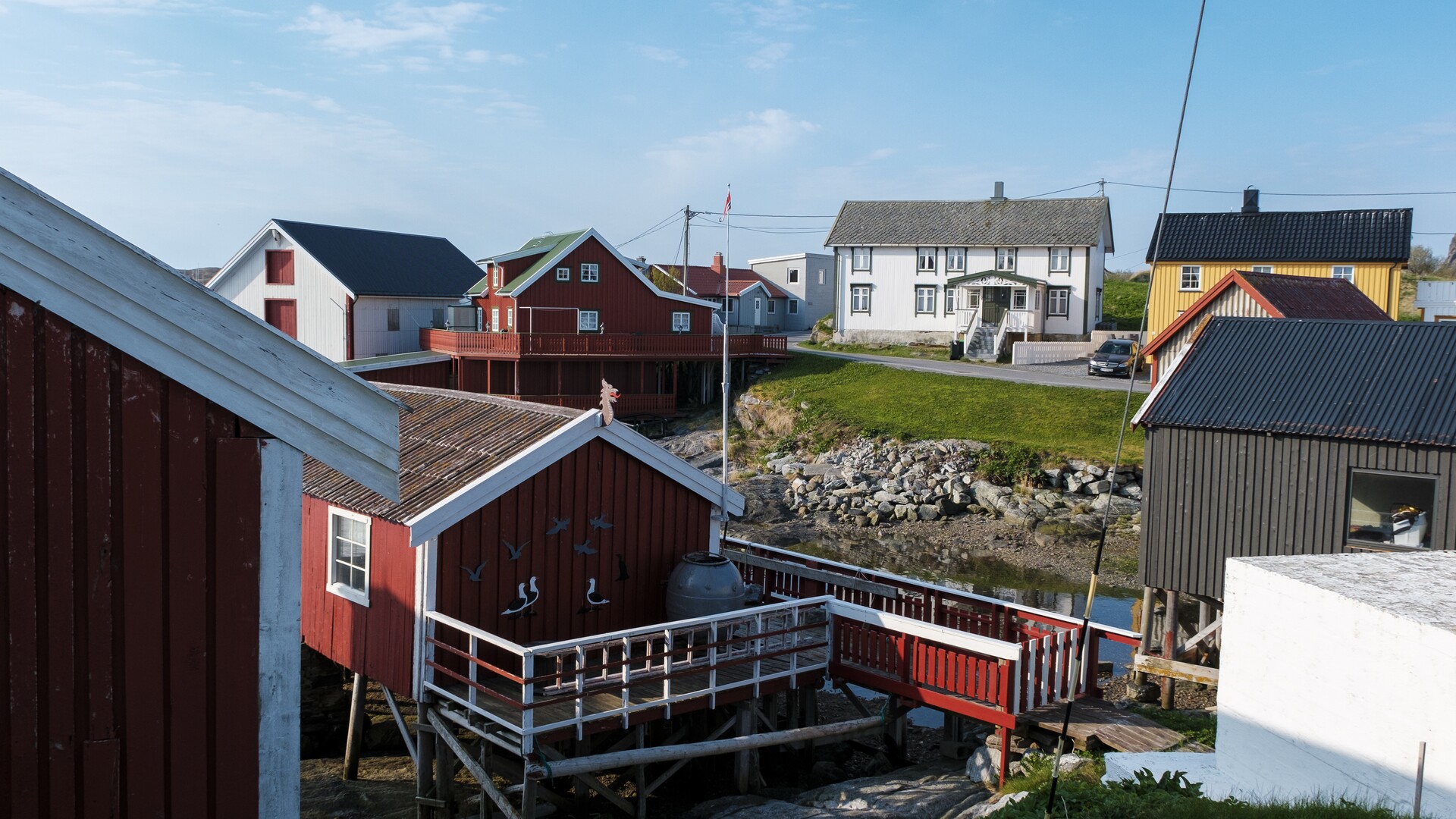
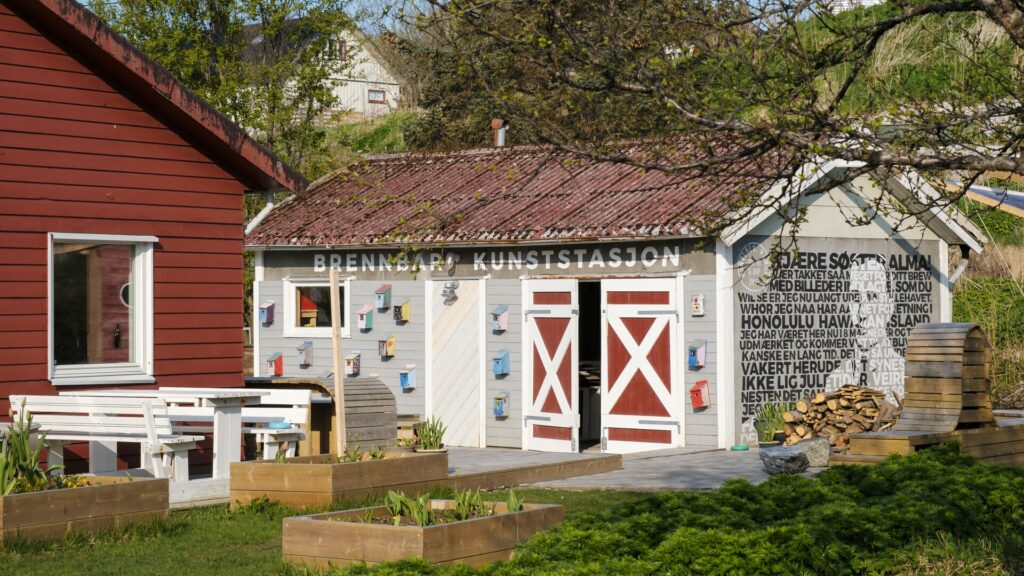
Træna Village Museum is located near the church and the tourist information center. The main building of the museum is an old Nordland house from 1910, called “The House on the Road”. At the museum, you can learn about Træna’s cultural heritage, including through an exhibition of archaeological finds from the cave Kirkhelleren on the neighboring island Sanna. The oldest finds there show that there has been fishing in Træna as far back as 8-9000 years.
 Kristoffer Møllevik / Visit Helgeland
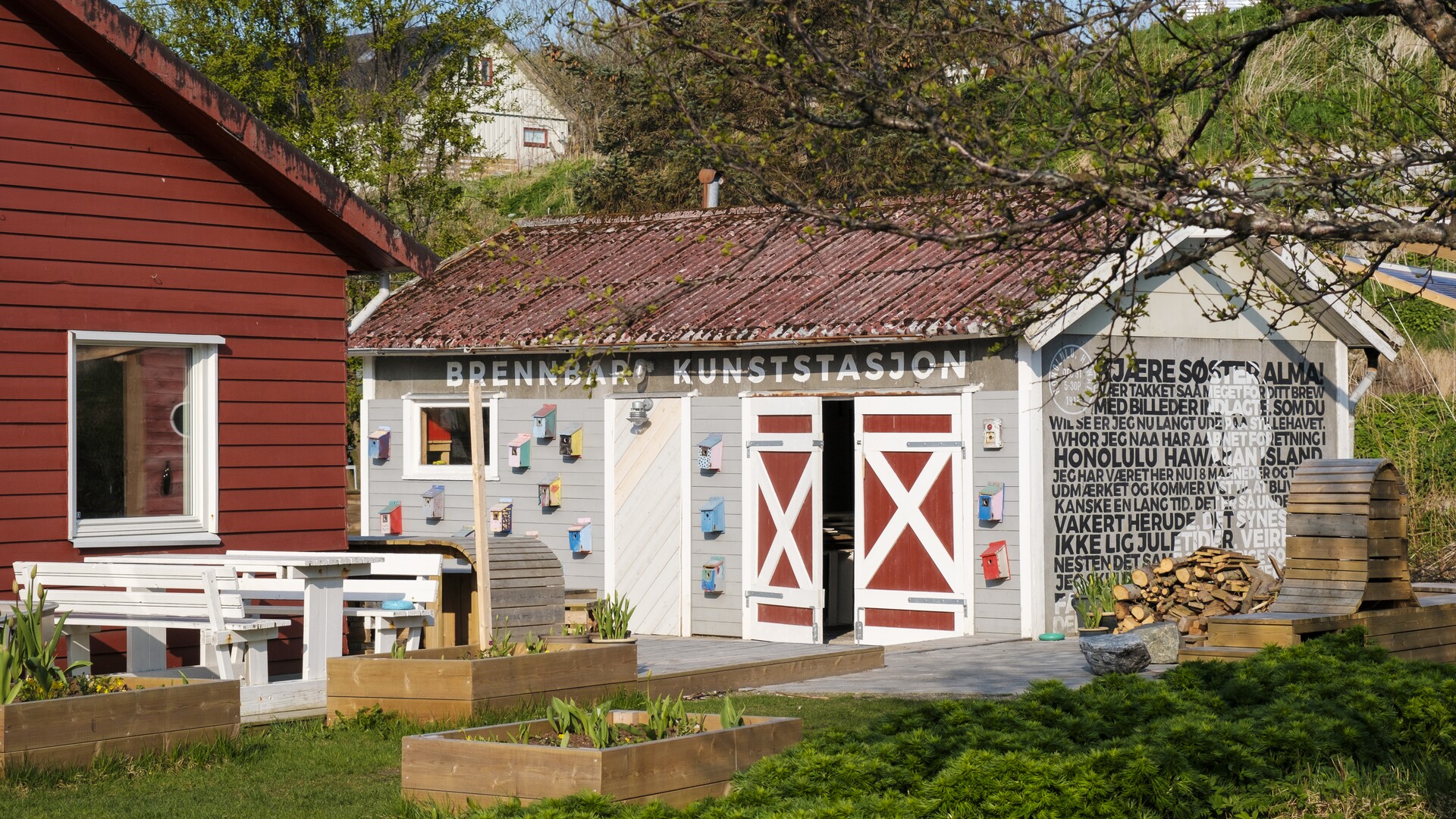
Here you can also see the exhibition “Træna – Hawaii,” which tells the story of Theodor Holmen, who left Træna and moved to Hawaii in 1898. He left before his younger sister Alma was born, and the siblings never met. But they maintained correspondence throughout their lives, and in 1925, Alma received a camera in the mail. Alma took pictures of life in Træna and remained there until her death in 1997. The photos and letters provide a fascinating window into the past, into two similar yet different lives, on each side of the globe.
Bystranda
Feel free to end the tour with a swim or a peaceful moment at the town beach in Janesvågen. The area is a combined bathing spot, recreational area, and social meeting place, and it was built by two students from Seattle.
This is another good example of how the island community both receives and draws inspiration and impulses from the outside world. In this way, Træna, after 9000 years, remains a rich and vibrant local community. Far out at sea, but far from isolated. A part of the whole.
1. Follow the Norwegian Mountain Code and plan according to your ability and equipment
Short hikes on easy terrain don’t require much. If you’re heading out for an hour or two in the lowlands and not gaining much elevation, you won’t need a lot of gear or be in top shape. If it gets cold or you get tired, you’re usually not far from your car.
But if you’re heading into more challenging terrain—steeper, rougher, and above the treeline where the weather is more unpredictable—you’ll need to be better prepared. You should plan the trip based on weather and conditions, be fit enough to complete it, and be ready for uneven ground, boulder fields, slippery roots, and stream crossings. That means carrying a heavier pack with extra clothes and gear, and wearing sturdy hiking boots that support your ankles.
If you’re unsure about taking on a demanding mountain hike, start with an easy or moderate one and see how it feels.
Learn more about the Norwegian Mountain Code at rodekors.no
See what you should bring on your hike on VisitNorway.com
2. Stick to marked trails
A shortcut through unfamiliar terrain can easily turn into a long and difficult detour. What looks like a trail might just be a sheep path that leads you somewhere completely unexpected. If you want the hike to be as easy or challenging—and as long or short—as planned, it’s best to follow marked trails.
If you’re heading off-trail, it’s smart to follow a GPS track. You can download a GPX file from a hike description and use it on a GPS device, a smartphone app, or a GPS watch.
UT.no and the UT app offer hike descriptions with GPS tracks. If your hike doesn’t have one, you can upload a track to ut.no/mine-turer and access it in the app. It’s free, but you’ll need to create an account.
Always carry a map and compass as backup.
UT app for Android / UT app for iPhone
3. Talk to locals or join a guided hike
Locals often have useful tips about your planned hike. They can tell you where to park, whether there’s phone coverage, if the trail is wet, if rivers are high, or suggest a better alternative. Talk to the people where you’re staying, at the local tourist office, or other hikers on the trail—you might get some truly valuable advice.
The best option is to hike with a guide. You can join a group tour or book a private guide. These are experienced locals who know the area well. They’ll help tailor the hike to your needs and share insights that add to the experience.
4. Look out for cultural landmarks
Even high up in the mountains, you’ll find traces of past human activity—some hundreds or even thousands of years old. These can include ancient trail markers, signal cairns, hunting fences, huts, and shepherd shelters. If you spot something interesting, check the KulturPunkt app to see what it is—or use the app to find a cultural site as your hiking goal.
KulturPunkt app for Android / KulturPunkt app for iPhone
KulturPunkt.org
5. Remember your responsibilities under the Right to Roam
Norway’s Right to Roam means you can hike, bike, pick berries, camp, fish, and ski almost anywhere in nature. But it also comes with responsibilities—what we call the “duties of the Right to Roam.” Leave no trace, respect wildlife, and know the rules for hunting, fishing, cycling, and access in protected areas like national parks and nature reserves.
Read more about the Right to Roam and your responsibilities at VisitNorway.com
Thank you for respecting the local communities, and for helping us preserve the natural beauty of Helgeland!
Please:
- Strive to leave no trace of your visit. Bring back all your rubbish, including used toilet paper, and discard it in the nearest rubbish bin.
- Plan your toilet visits and use the opportunity when you pass a toilet. In the wilderness, make sure you are not a nuisance to others.
- Respect the local wildlife. Keep a good distance from wildlife, livestock and birds. Keep your dog leashed.
- Respect private property. Keep a respectful distance from houses and cabins.
- Show good boating sense. Keep a good distance from shore and drive at a low speed, especially when you are close to anyone or anything on the water, including birds or animals. Avoid loud and disturbing engine noise. Be aware that some islands and nature reserves are important nesting sites, and that going ashore is prohibited during the nesting season.
- Follow the Norwegian Mountain Code (Fjellvettreglene). Plan your excursion according to the weather forecast, your skills and experience.
- Join a guided excursion or consider hiring an experienced guide, especially when you don’t have sufficient experience or knowledge to guarantee a safe trip.
Find accommodation, food and activities nearby
Trænafestivalen
Music festival in Træna
July 9th to 12th 2025
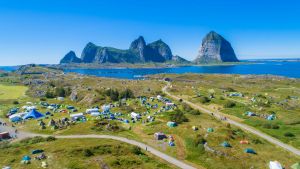
Trænafestivalen is a cultural experience as breathtaking and unique as the landscape it’s set in—beautiful Træna, located on the outer edge of the Helgeland coast. This is one of the most exciting opportunities to experience these remote islands at their most vibrant.
Seil Norge – Sailing adventures on the Helgeland coast
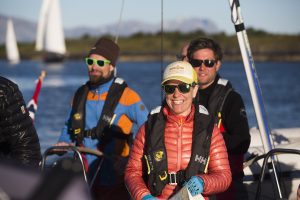
SeilNorge is the country’s leading organizer of sailing tours, expeditions, and sailing courses. Join them for an active holiday week up and down along Norway’s most beautiful coastline; the Helgeland coast. Set against a backdrop of thousands of islands, islets, and skerries, you will learn the art of sailing, whether you are a beginner or experienced sailor.

Ytri Island Retreat – more than just a hotel
Ytri Island Retreat in Træna is an exclusive coastal resort offering 38 rooms and suites, a bar, seafood restaurant, meeting rooms, saunas, an outdoor wellness area, boathouse, guest harbor, and a sandy beach.
Volunteer Tourism on Træna
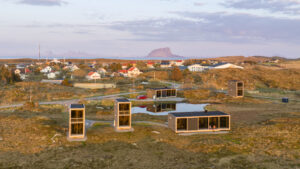
Now you can become a volunteer tourist on Træna and receive free accommodation at House by the Sea in exchange for participating in volunteerism – contributing and becoming a part of the local community.
Sauna in Træna’s Old Boathouse
Get warm in the wood-fired sauna inside Træna’s oldest boathouse, then cool off with a refreshing dip in the crystal-clear sea just outside.