Hike description: Rødøyløva
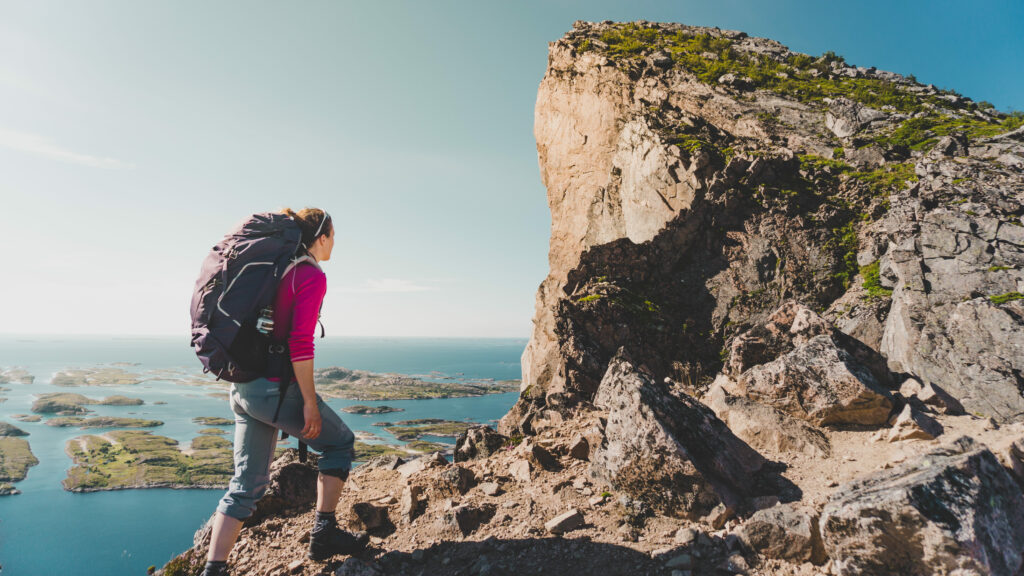 Simon Fossheim / Visit Helgeland
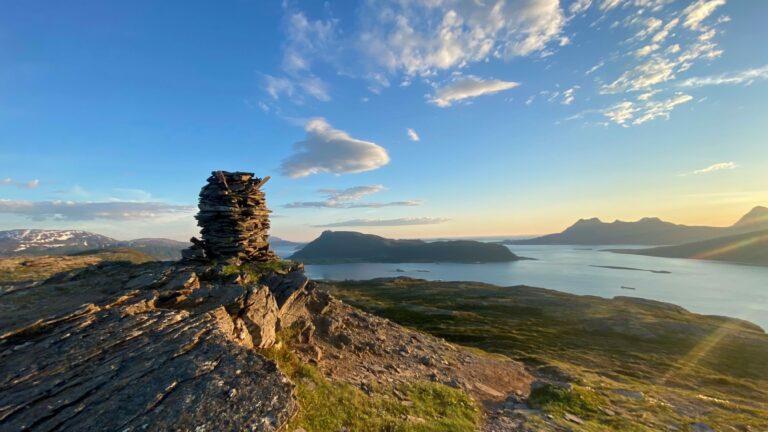
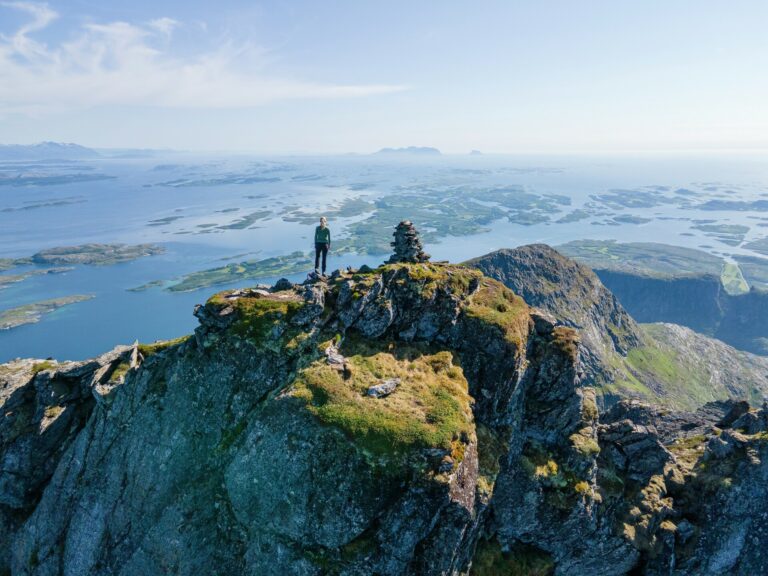
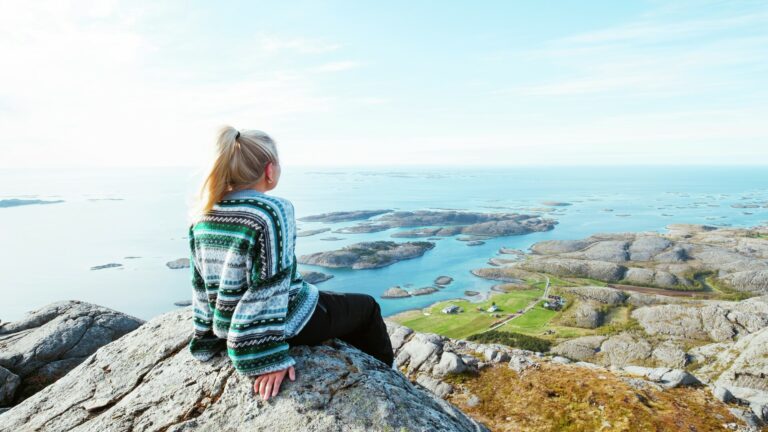
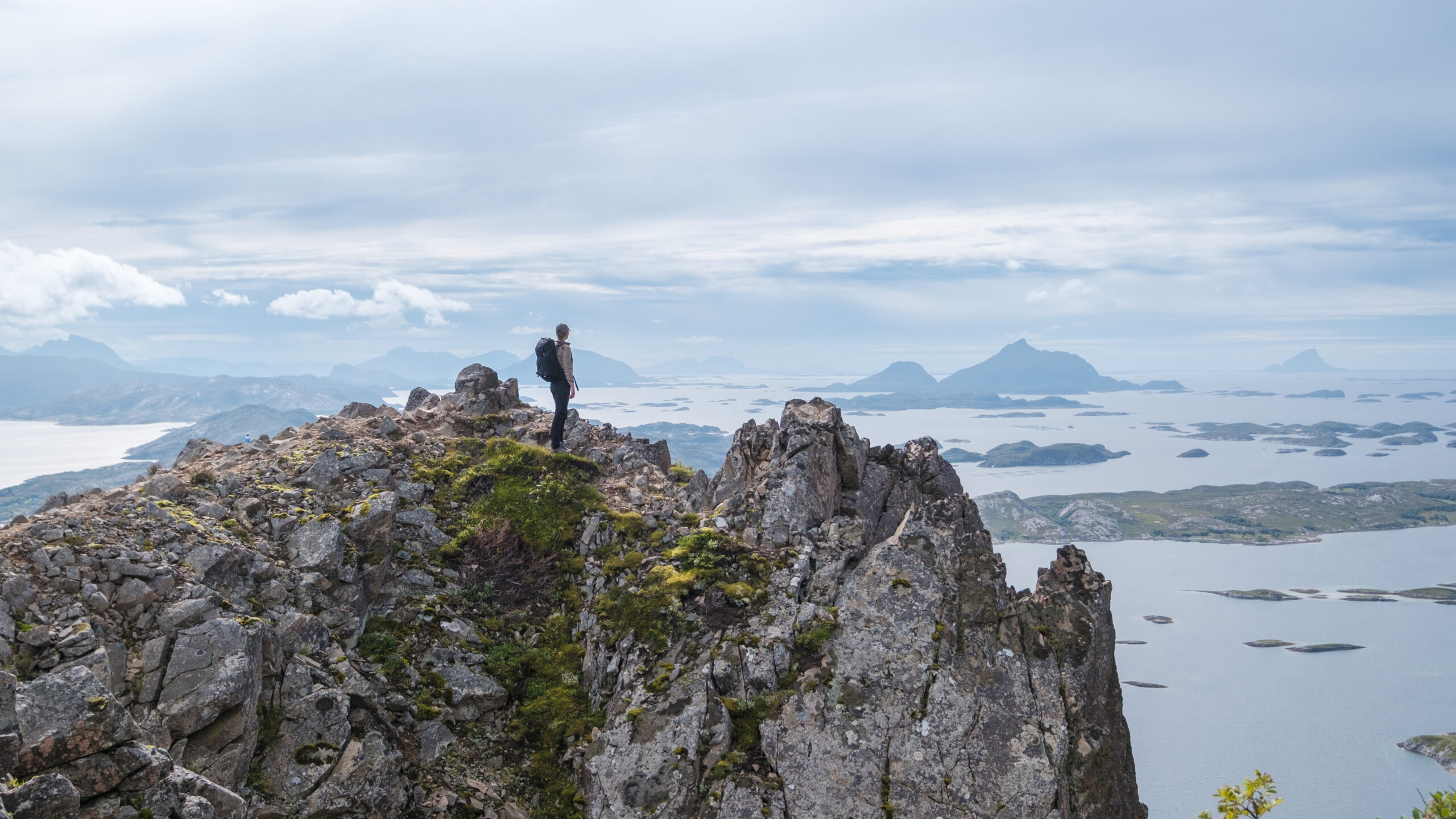
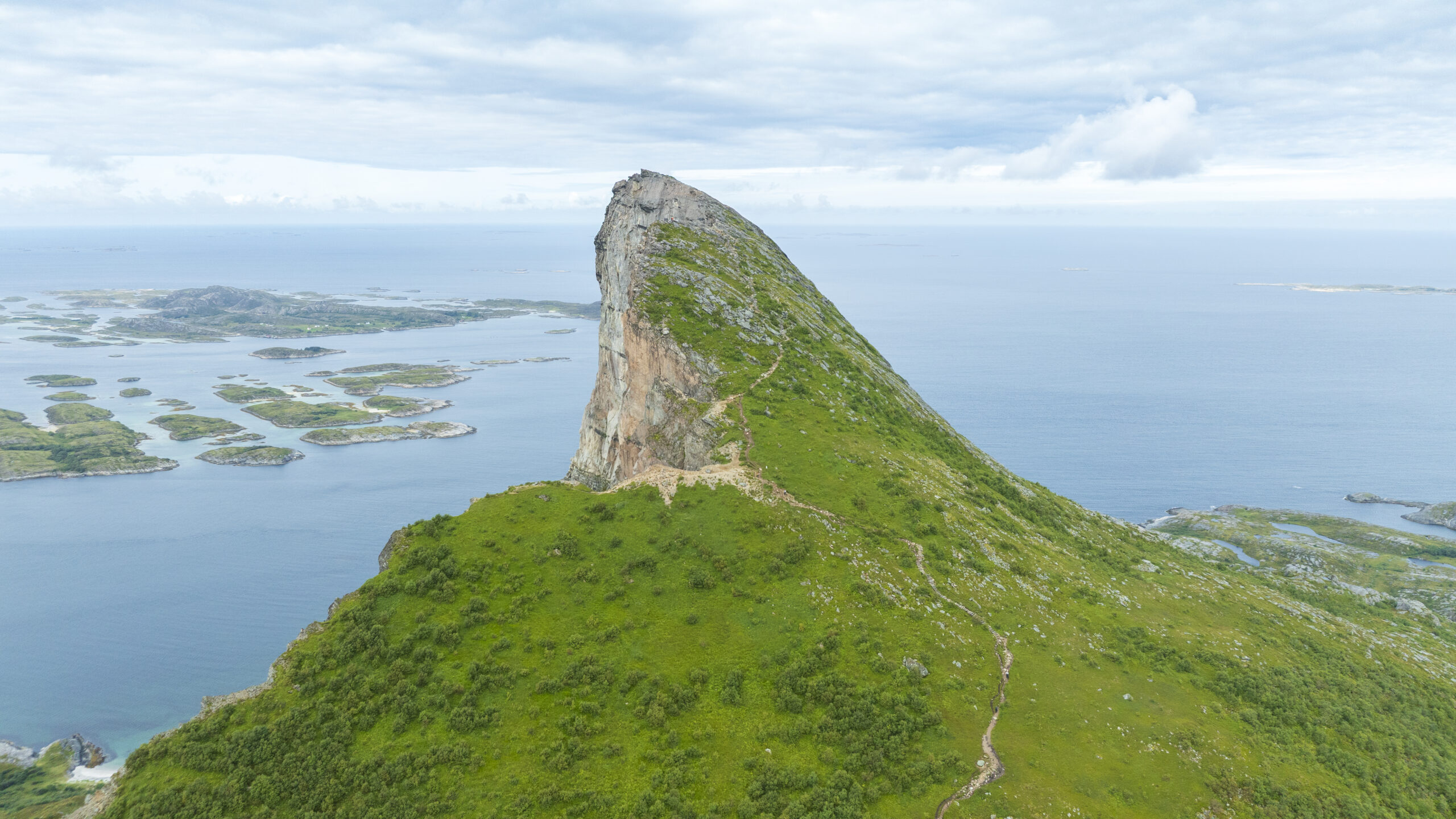
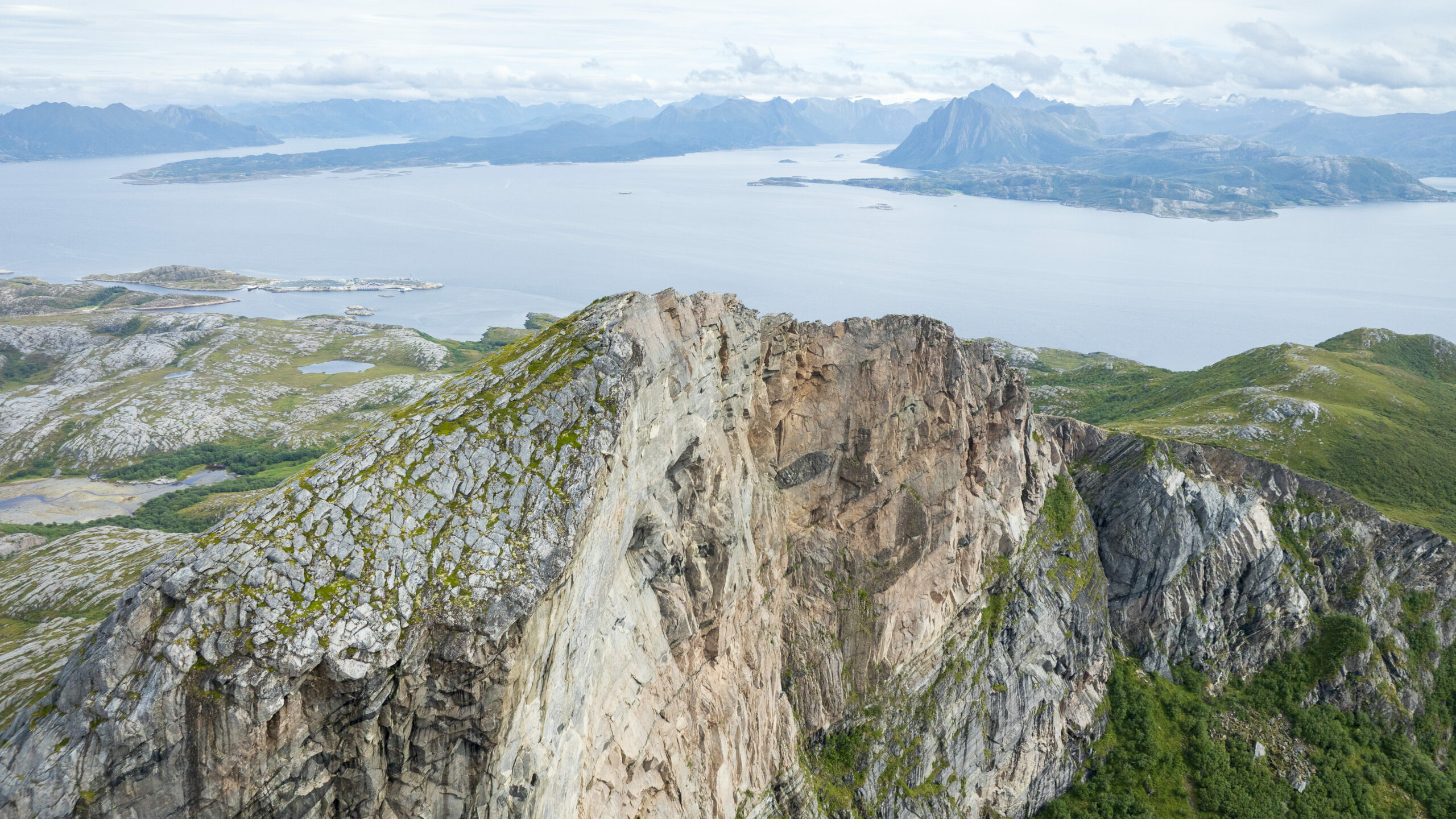
Rødøyløva is one of Helgeland’s most popular and scenic hikes, as well as Northern Norway’s first National Tourist Trail. The mountain isn’t very high, and the hike isn’t long, but the view from the top is still stunning, stretching from the Lofoten Wall in the north to Vega in the south.
Hiking information
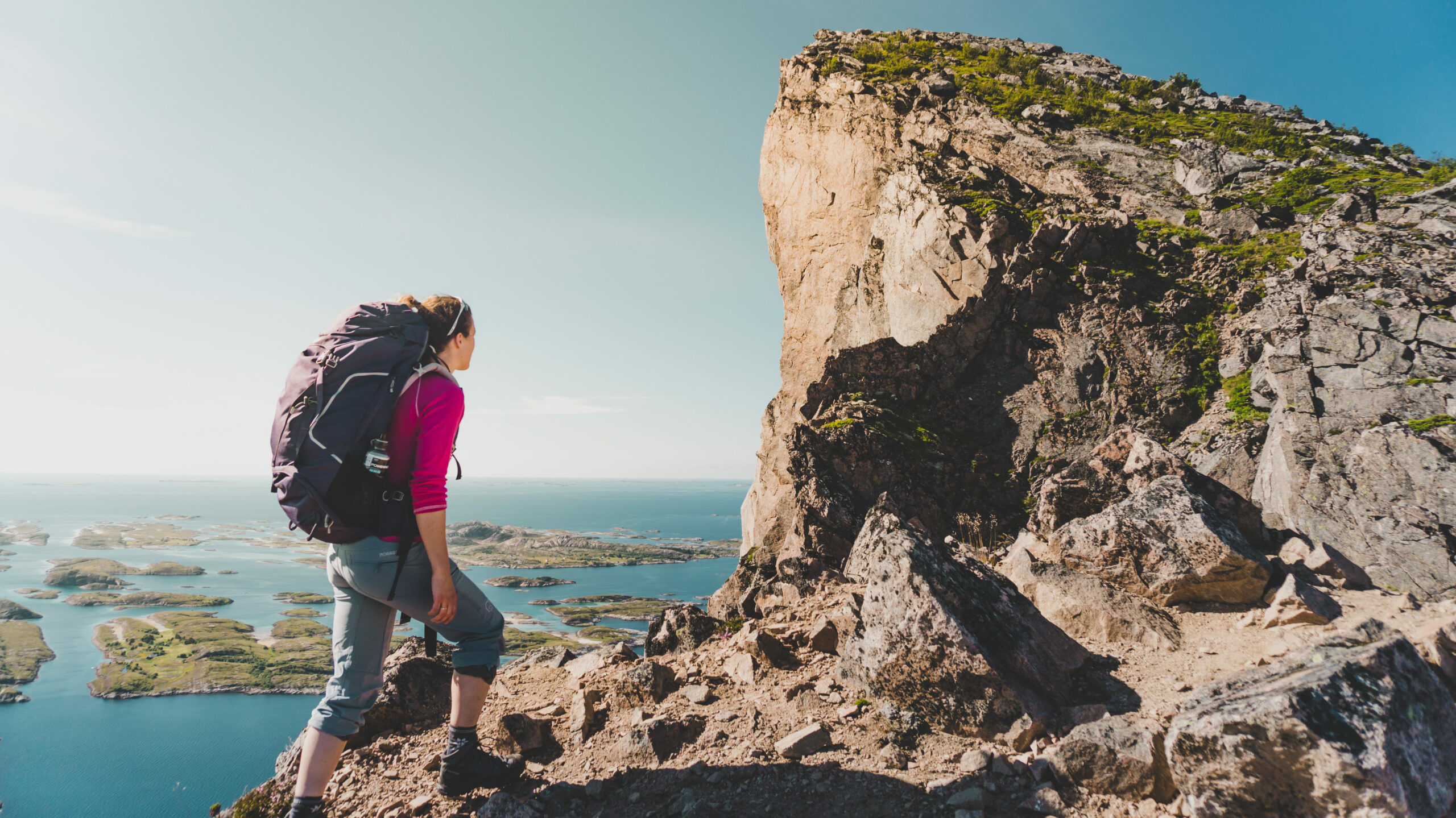
Difficulty: Moderate. The trail is equipped with a sherpa stairway (stone steps) for most of the hike. The summit is very exposed and located in steep terrain. Good hiking shoes are recommended.
One-way distance: 1.5 km
Elevation gain: 443 meters
One-way hiking time: 1.5 – 2 hours
Season: Year-round, but traction cleats are strongly recommended during winter.
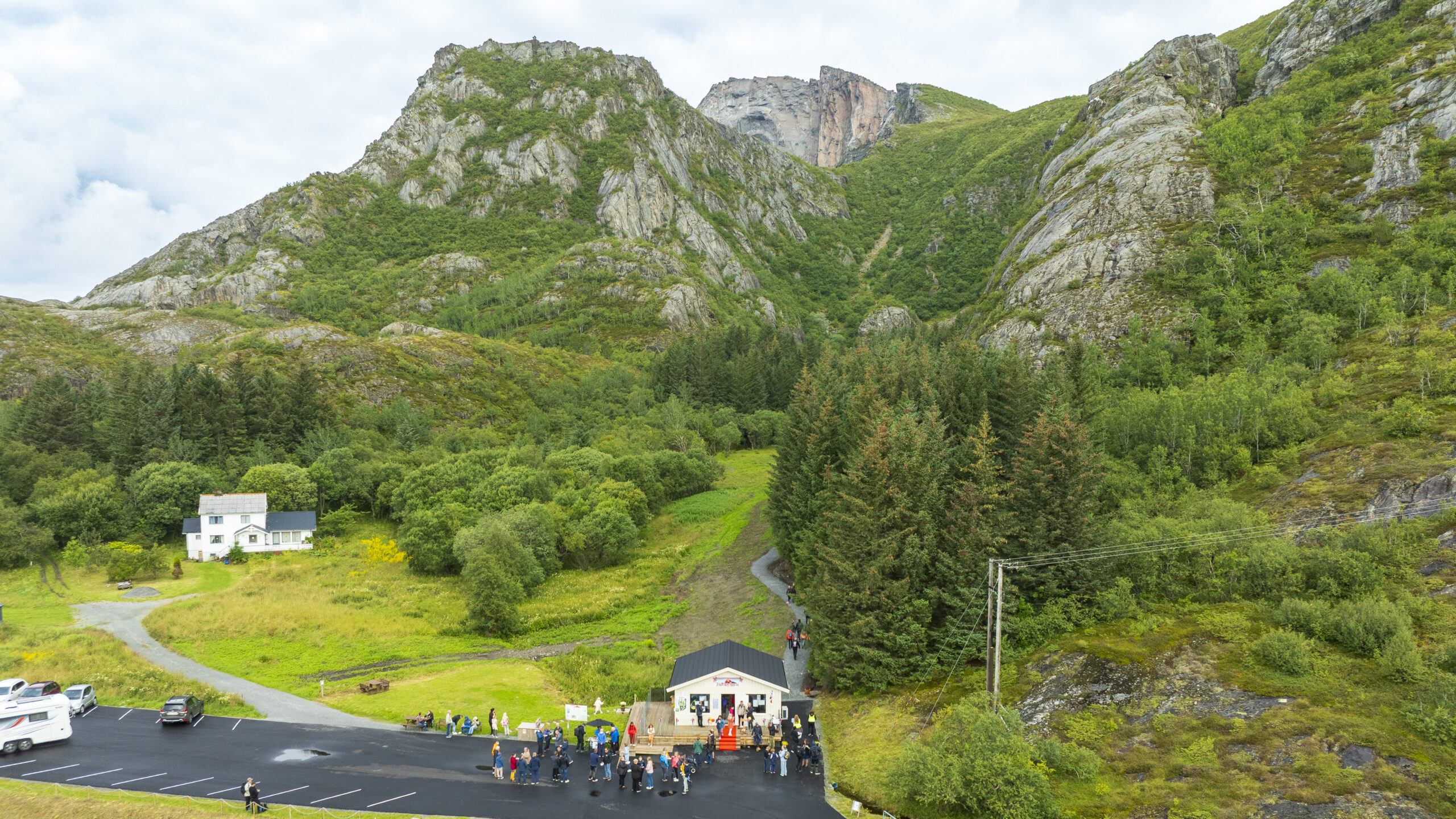
Starting point: The hike starts at the car park and service building next to Klokkergården, on the western side of the island, approximately 2.5 km from the ferry and express boat terminal.
View the starting point on Google Maps
Special considerations: The stairs are steep, so take extra care and use ice cleats if there is frost or icy ground. The summit ends in a vertical cliff and is not protected by railings or barriers. Do not sit or lean over the edge with your legs or upper body.
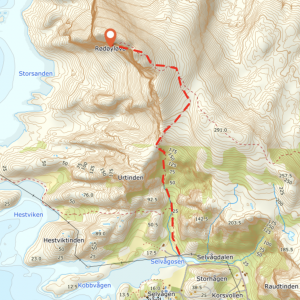 Statens Kartverk / Norgeskart.no
Hiking description
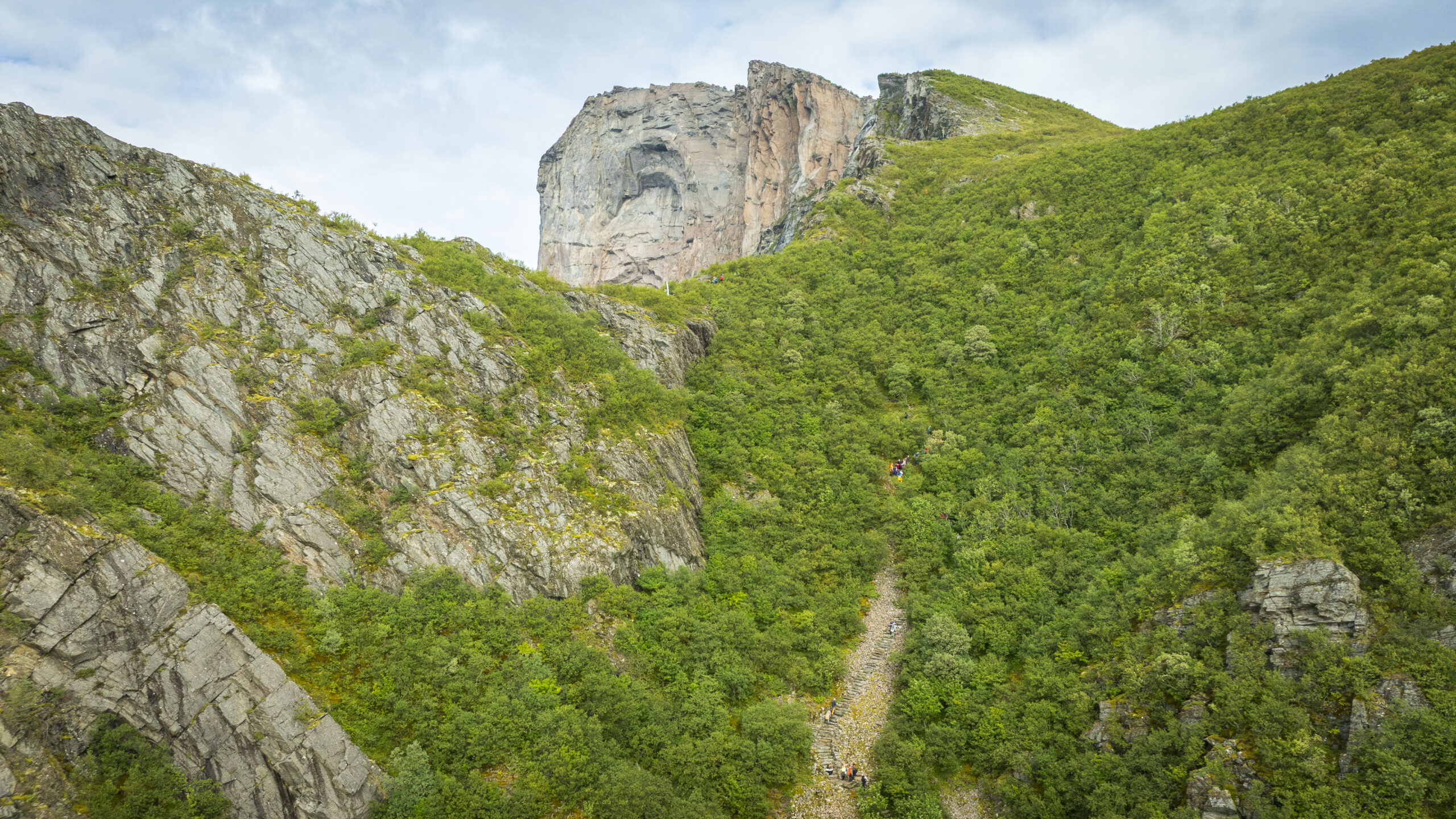
Standing about 440 meters above sea level, Rødøyløva is a classic summit hike in Helgeland. The trail is quite steep, but the reward at the top is a phenomenal panorama, reaching from the Lofoten Wall in the north to Vega in the south. As a National Tourist Trail, the path is well-marked and maintained, with stone steps in the steepest sections.
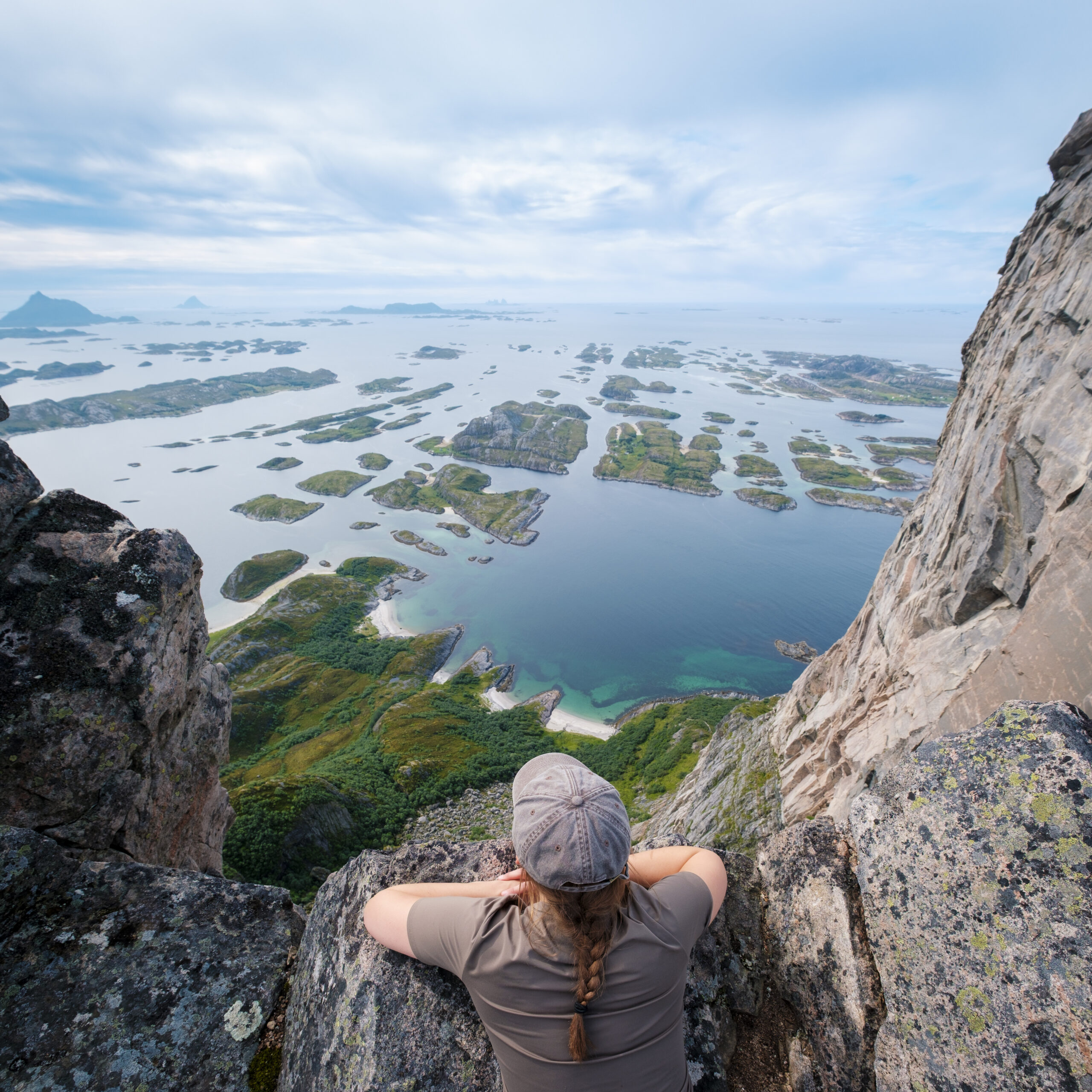
Starting from Klokkergården, the trail is initially steep for the first 200 meters of ascent, but you quickly encounter a spectacular view. From the summit, you have panoramic views in all directions. You can even gaze down at the beautiful, chalk-white beaches below. The crystal-clear water surrounding hundreds of small islands is a magnificent sight. It offers breathtaking views, but please exercise caution as you are standing at the edge of a 400-meter cliff.
To reach Rødøyløva, you will need to take a boat, ferry, or speedboat from the mainland. Ferries depart from Kilboghamn and Jektvik, while speedboats are available from Bodø, Ørnes, Tonnes, Nesna, or Sandnessjøen. There are few daily departures, so plan accordingly if you wish to make a day trip from the mainland. If you have your own boat, you can dock at Klokkergården at the foot of the mountain. A useful tip when traveling by public transport is to bring a bicycle on the boat. The trail to the mountain starts approximately 2.5 kilometers from the dock. Additionally, the rest of the island is perfect for exploring by bike after the hike.
Before or after the hike, it is recommended to visit Klokkergården, located near Rødøyløva. There, you can purchase food and drinks to recharge before your next adventure.
1. Follow the Norwegian Mountain Code and plan according to your ability and equipment
Short hikes on easy terrain don’t require much. If you’re heading out for an hour or two in the lowlands and not gaining much elevation, you won’t need a lot of gear or be in top shape. If it gets cold or you get tired, you’re usually not far from your car.
But if you’re heading into more challenging terrain—steeper, rougher, and above the treeline where the weather is more unpredictable—you’ll need to be better prepared. You should plan the trip based on weather and conditions, be fit enough to complete it, and be ready for uneven ground, boulder fields, slippery roots, and stream crossings. That means carrying a heavier pack with extra clothes and gear, and wearing sturdy hiking boots that support your ankles.
If you’re unsure about taking on a demanding mountain hike, start with an easy or moderate one and see how it feels.
Learn more about the Norwegian Mountain Code at rodekors.no
See what you should bring on your hike on VisitNorway.com
2. Stick to marked trails
A shortcut through unfamiliar terrain can easily turn into a long and difficult detour. What looks like a trail might just be a sheep path that leads you somewhere completely unexpected. If you want the hike to be as easy or challenging—and as long or short—as planned, it’s best to follow marked trails.
If you’re heading off-trail, it’s smart to follow a GPS track. You can download a GPX file from a hike description and use it on a GPS device, a smartphone app, or a GPS watch.
UT.no and the UT app offer hike descriptions with GPS tracks. If your hike doesn’t have one, you can upload a track to ut.no/mine-turer and access it in the app. It’s free, but you’ll need to create an account.
Always carry a map and compass as backup.
UT app for Android / UT app for iPhone
3. Talk to locals or join a guided hike
Locals often have useful tips about your planned hike. They can tell you where to park, whether there’s phone coverage, if the trail is wet, if rivers are high, or suggest a better alternative. Talk to the people where you’re staying, at the local tourist office, or other hikers on the trail—you might get some truly valuable advice.
The best option is to hike with a guide. You can join a group tour or book a private guide. These are experienced locals who know the area well. They’ll help tailor the hike to your needs and share insights that add to the experience.
4. Look out for cultural landmarks
Even high up in the mountains, you’ll find traces of past human activity—some hundreds or even thousands of years old. These can include ancient trail markers, signal cairns, hunting fences, huts, and shepherd shelters. If you spot something interesting, check the KulturPunkt app to see what it is—or use the app to find a cultural site as your hiking goal.
KulturPunkt app for Android / KulturPunkt app for iPhone
KulturPunkt.org
5. Remember your responsibilities under the Right to Roam
Norway’s Right to Roam means you can hike, bike, pick berries, camp, fish, and ski almost anywhere in nature. But it also comes with responsibilities—what we call the “duties of the Right to Roam.” Leave no trace, respect wildlife, and know the rules for hunting, fishing, cycling, and access in protected areas like national parks and nature reserves.
Read more about the Right to Roam and your responsibilities at VisitNorway.com
Thank you for respecting the local communities, and for helping us preserve the natural beauty of Helgeland!
Please:
- Strive to leave no trace of your visit. Bring back all your rubbish, including used toilet paper, and discard it in the nearest rubbish bin.
- Plan your toilet visits and use the opportunity when you pass a toilet. In the wilderness, make sure you are not a nuisance to others.
- Respect the local wildlife. Keep a good distance from wildlife, livestock and birds. Keep your dog leashed.
- Respect private property. Keep a respectful distance from houses and cabins.
- Show good boating sense. Keep a good distance from shore and drive at a low speed, especially when you are close to anyone or anything on the water, including birds or animals. Avoid loud and disturbing engine noise. Be aware that some islands and nature reserves are important nesting sites, and that going ashore is prohibited during the nesting season.
- Follow the Norwegian Mountain Code (Fjellvettreglene). Plan your excursion according to the weather forecast, your skills and experience.
- Join a guided excursion or consider hiring an experienced guide, especially when you don’t have sufficient experience or knowledge to guarantee a safe trip.
Nearby
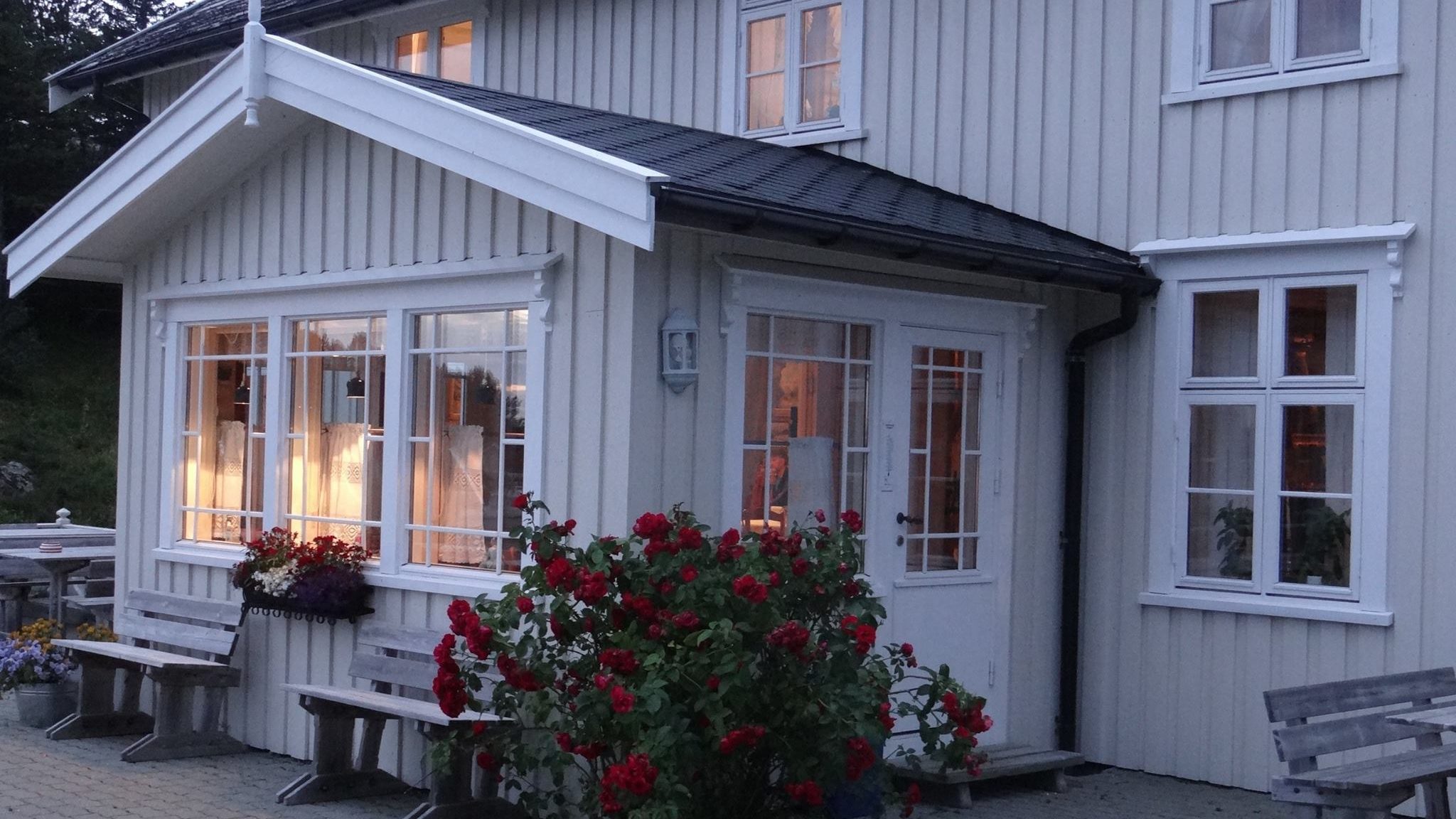
Klokkergården – Stay in nostalgic surroundings on the island of Rødøy
At the foot of the majestic mountain called Rødøyløva, is the stately Klokkergården, a sexton’s residence that dates back to 1904. Here you can enjoy warm hospitality in surroundings that recall a bygone era.
Read more & book